Home › Asphalt Sealcoating & Crack Filling
Keep your driveway looking great with asphalt sealcoating and crack filling in St Louis, MO by Precision Asphalt St Louis. Our team cleans, repairs, and seals your asphalt to block water, UV, and chemical damage so your pavement lasts longer and stays smoother.
Precision Asphalt St. Louis provides professional asphalt sealcoating throughout St Louis, MO, Missouri and the surrounding area. Our licensed, insured crew delivers safe, clean, on-time work with a free estimate before anything begins. Call (314) 333-7779 or request your free quote.
Asphalt Sealcoating & Crack Filling in St. Louis, MO
St. Louis winters, rock salt, and heavy traffic are hard on asphalt. If your driveway or parking lot is starting to gray, ravel, or crack, timely asphalt sealcoating and crack filling can easily add 5 to 10 years of life to the pavement. Precision Asphalt St. Louis focuses on preserving existing asphalt throughout the metro area, from older city neighborhoods like Tower Grove and South City to newer subdivisions in St. Charles and Jefferson County.
Our crews do not treat sealcoating as a quick cosmetic spray. We approach it as preventive pavement maintenance that protects the base you already paid for. That means proper surface prep, crack treatment, and material selection tailored to local conditions, including Missouri freeze-thaw cycles and the fuel and oil spills common on busy commercial lots. When we are done, you get a darker, cleaner surface and, more importantly, a sealed system that sheds water instead of letting it soak into the base.
How Professional Asphalt Sealcoating Actually Works
Before any sealer goes down, we evaluate the condition of your asphalt. We look at color, texture, drainage patterns, and the size and pattern of cracks. Graying and light raveling are ideal for sealcoating. Deep alligator cracking or large base failures need repair or patching before we even consider sealing.
Step 1 is mechanical cleaning. We use high-powered blowers, wire brooms, and, where needed, steel bristle machines to remove dust, loose aggregate, and vegetation from the surface and cracks. This step determines how well the sealer bonds, so we do not rush it.
Step 2 is oil spot treatment. In many St. Louis driveways and loading areas, leaked motor oil or hydraulic fluid will prevent sealer from sticking. We apply an oil spot primer that helps break down surface contamination and gives the sealer something to grip.
Step 3 is application of the asphalt sealer itself. Precision Asphalt St. Louis uses commercial-grade refined tar or asphalt emulsion, depending on the site and environmental requirements. For high-traffic commercial lots that see frequent turning movements, we often recommend a sand-loaded mix that improves skid resistance and durability. The sealer is applied by spray, brush, or a combination of both. We cut-in edges and around structures by hand, then spray or squeegee the open areas for an even film thickness.
Finally, we allow proper cure time. In typical St. Louis summer weather, light residential traffic can usually return after 24 hours. Shaded areas or humid conditions may require more time. For commercial sites, we often stage work in sections so customer access is maintained while the sealer cures.
Crack Filling: Stopping Water Before It Destroys the Base
Crack filling is the most important part of extending pavement life in our freeze-thaw climate. Water that seeps through a crack into the base will expand when it freezes, which widens the crack and weakens the underlying stone. Over a few winters, those cracks become potholes.
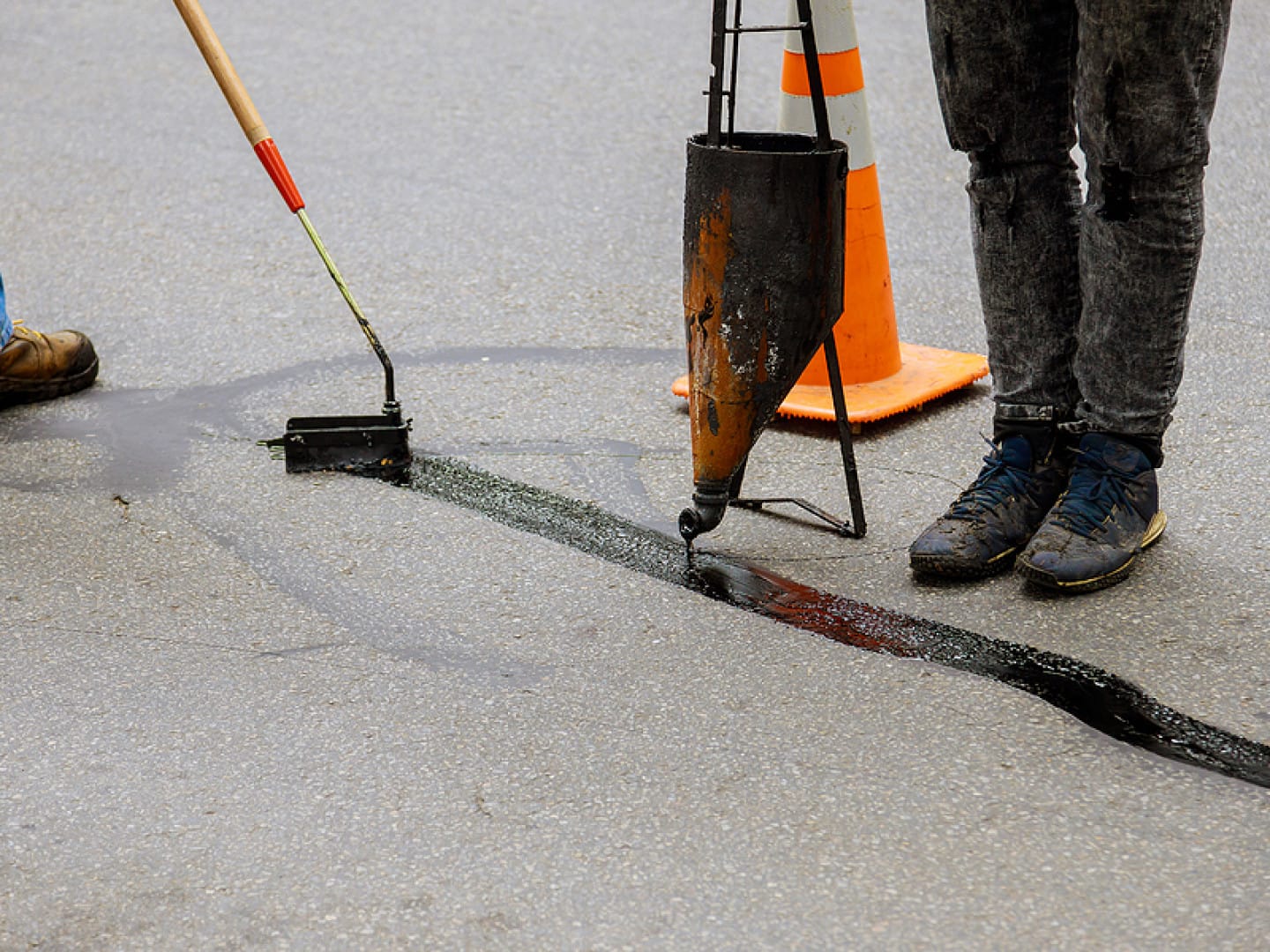
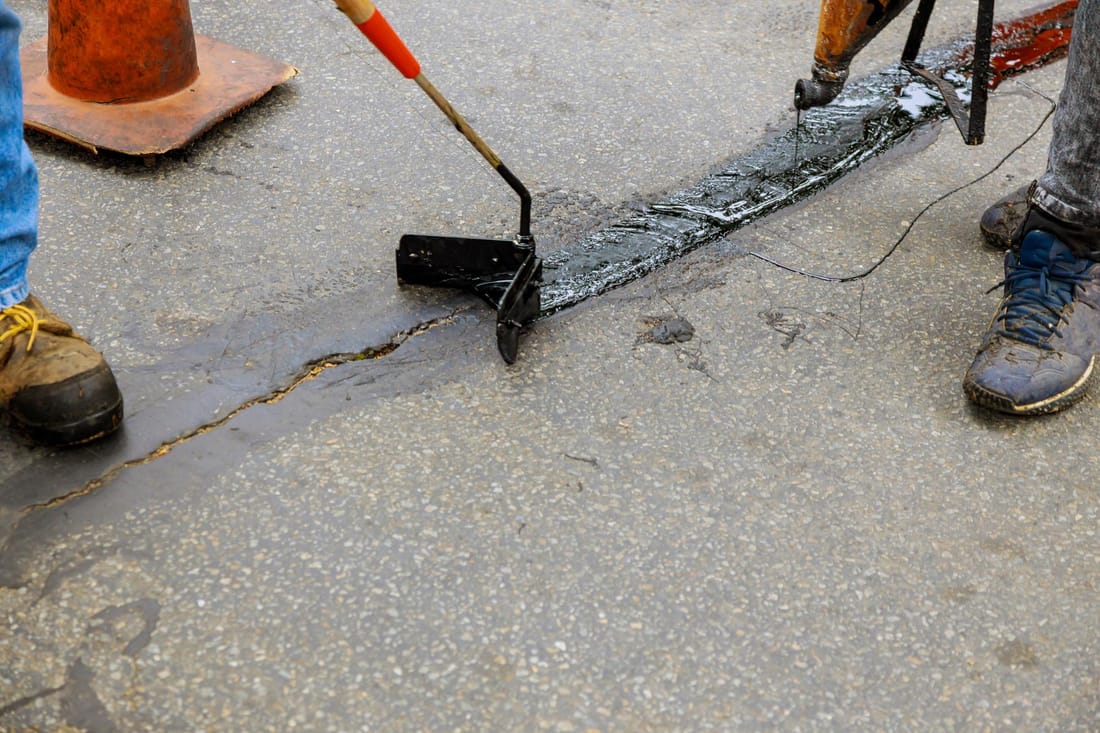
Precision Asphalt St. Louis uses hot-applied, rubberized crack sealant for active working cracks (typically 1/4 inch to 1 inch wide) in driveways and parking lots throughout St. Louis. The process starts with cleaning and, where appropriate, routing the crack to create a uniform reservoir. We then use high-pressure air to clear dust and moisture right before applying the hot sealant, which is heated in a dedicated melter to the manufacturer-specified temperature.
The liquid rubber is then poured or banded into the crack, slightly overfilling it. As it cools, it bonds to the asphalt walls and remains flexible so it can move with seasonal expansion and contraction without tearing. In some residential settings where aesthetics are critical, we tool or sand the material to blend more smoothly with the surrounding surface.
Hairline cracks that are too small for hot rubber are typically sealed incidentally when we apply sealer, but we will point out any areas that are likely to open up in future seasons so you can plan ahead.
What Affects the Cost of Asphalt Sealcoating in St. Louis
Homeowners and property managers often ask why prices vary from quote to quote. Several real factors influence the cost of asphalt sealcoating and crack filling in our area.
Square footage is only a starting point. Surface condition is a major driver. A clean, relatively smooth subdivision driveway in Chesterfield will coat faster and with less material than a 30-year-old parking lot in south St. Louis that has raveling, fuel spills, and vegetation in the cracks.
Crack volume matters more than simply counting cracks. We measure how many linear feet of cracks need treatment and the average width. Wide working cracks require more hot rubber, more prep, and sometimes routing.
Layout and access also affect cost. Tight city alleys, steep driveways in areas like Sunset Hills, or lots with many islands and curbs take more hand work and time than open rectangles. The need to phase work to keep businesses open, or to work at off-hours to avoid disrupting a medical office or church schedule, will factor into the proposal as well.
Finally, material selection and number of coats affect price. Some heavily trafficked commercial properties benefit from two coats of sand-filled sealer and a follow-up crack inspection, while many residential driveways are best served by a single high-quality coat after thorough crack filling.
Timing, Weather, and St. Louis Climate Considerations
Sealcoating and crack filling are highly weather dependent. In the St. Louis region, the practical season usually runs from late April through early October, with some flexibility in mild years. We look for ground temperatures above about 50 degrees and dry conditions for at least 24 hours after application.
Humidity is a frequent issue along the Mississippi River. High moisture in the air can slow curing, especially in shaded North-facing driveways or lots bordered by mature trees, such as many properties in older St. Louis neighborhoods. Precision Asphalt St. Louis schedules work with sun exposure and drainage in mind and will tell you upfront if your site is likely to cure slowly.
We strongly recommend crack filling before winter, even if full sealcoating has to wait. Sealing the cracks before freeze-thaw season starts does the most to limit new damage. For many clients, we schedule crack sealing in late fall and full sealcoating the following spring.
We also pay attention to wind. On tighter city streets with vehicles parked nearby, we may rely more on squeegee and brush application to control overspray and keep your neighbor’s property clean.
What St. Louis Property Owners Should Do Before and After
A smooth project depends on a few simple steps from the property owner. Before our crew arrives, we ask that vehicles be moved from the work area and that automatic sprinklers be turned off. If you have landscaping that drains onto the pavement, such as gutter extensions or sump pump outlets, let us know, since we may need to manage that water during the work.
Precision Asphalt St. Louis handles traffic control and barricades on commercial projects and will mark off residential driveways with tape and cones. Keeping vehicles, pets, and foot traffic off the surface until we clear it is critical. Walking on uncured sealer can track material onto sidewalks, garage floors, and interior flooring.
After curing, basic care extends the life of your investment. Avoid sharp turning of steering wheels while stationary, especially in hot summer weather. Clean up oil spills promptly. On commercial sites, consider a sweeping program to remove abrasive sand and grit. We can recommend an appropriate reseal interval based on traffic and exposure, often every 3 to 5 years for residential driveways and 2 to 3 years for busier commercial lots.
Our team documents existing damage and repairs, and for larger properties we can provide a maintenance plan so you can budget for future work instead of reacting to surprises.
Why Work With Precision Asphalt St. Louis
Many outfits treat sealcoating as a quick seasonal sideline. At Precision Asphalt St. Louis, pavement maintenance is a core service, not a side job. We are familiar with the full range of local conditions, from tight city driveways off alleys to large industrial yards in the Metro East, and we adjust our methods and materials accordingly.
We own and maintain professional-grade sealcoating and crack filling equipment, including hot rubber melters, industrial blowers, and agitation tanks that keep the sealer mixed correctly throughout the job. This matters because separation or inconsistent mixing leads to thin spots and premature wear.
Our estimates are detailed. We break out sealcoating, crack filling, patching, and striping so you know exactly what you are paying for and can prioritize if needed. During the job, you will see our crew taking time on cleaning, edges, and cracks, not just spraying black material and leaving.
If you are in the St. Louis, Missouri area and your pavement is starting to show its age, we can assess whether asphalt sealcoating and crack filling are the right next step or if more substantial repair is needed. The goal is always the same: to protect your asphalt investment and keep your property looking cared for, without overselling work that will not actually add life to your pavement.