Home › Commercial Gravel-to-Asphalt Conversions
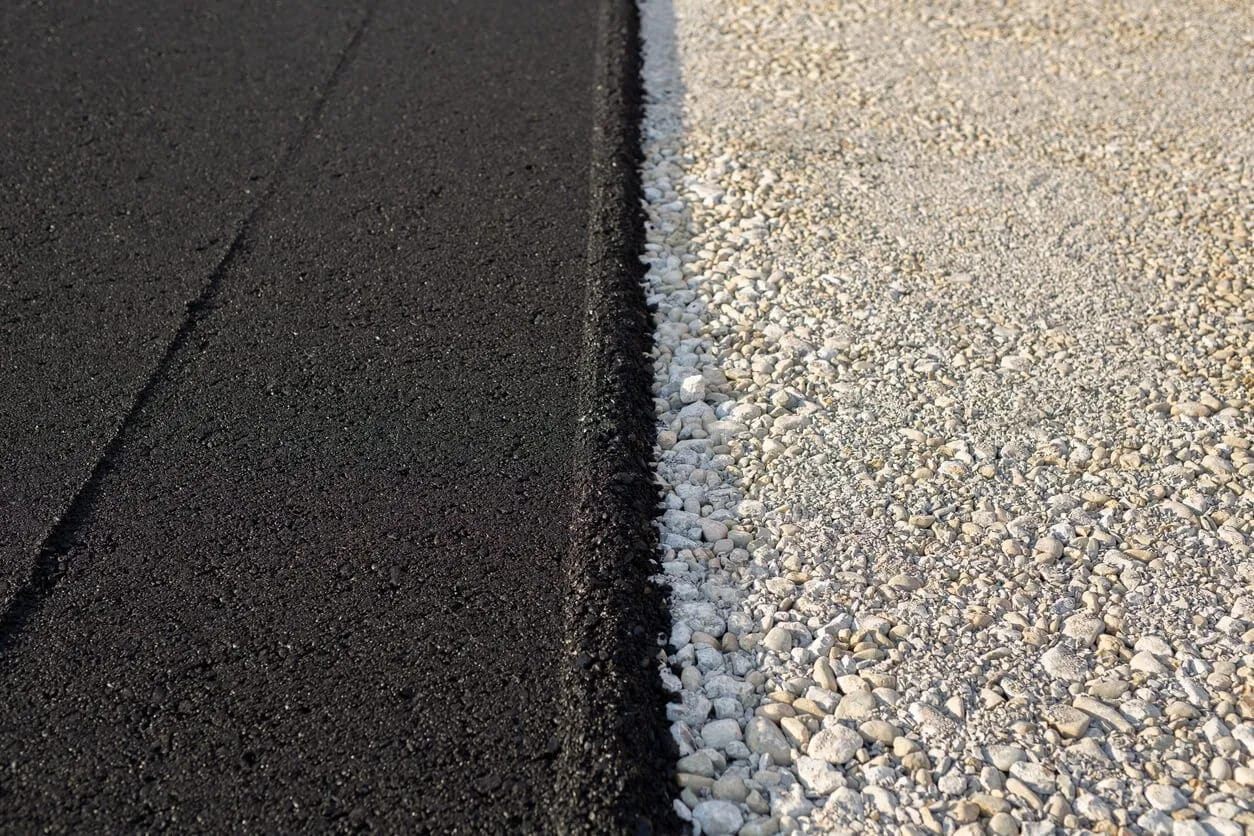
Turn dusty gravel into clean pavement with commercial gravel to asphalt conversions in St Louis, MO from Precision Asphalt St Louis. We evaluate your existing surface, add base as needed, then pave a durable asphalt lot or drive that is easier to plow, stripe, and maintain.
Precision Asphalt St. Louis provides professional commercial gravel to asphalt throughout St Louis, MO, Missouri and the surrounding area. Our licensed, insured crew delivers safe, clean, on-time work with a free estimate before anything begins. Call (314) 333-7779 or request your free quote.
Turn Your Gravel Lot Into a Professional Asphalt Surface
If you run a business in St. Louis and you are tired of dust, potholes, and washouts in your gravel lot, a commercial gravel to asphalt conversion can be a smart long-term upgrade. Precision Asphalt St. Louis focuses on converting existing gravel parking lots, drive lanes, and loading areas into smooth, striped asphalt that looks professional and holds up to Midwest weather.
Most commercial clients who call us are dealing with recurring gravel grading costs, mud tracked into buildings, and vehicles getting beat up by ruts. Asphalt solves these problems by creating a stable, sealed surface that drains predictably and meets customer expectations. In many parts of St. Louis County and nearby municipalities like Florissant, Arnold, and Chesterfield, paving a customer parking area is also a practical way to improve perceived property value and comply better with local commercial standards.
On this page, we will walk through how commercial gravel to asphalt conversions actually work, what affects pricing, what to expect during construction, and how we adapt projects to St. Louis soil and weather conditions so you are not just getting a black surface, you are getting a pavement structure built for the way your business really operates.
How a Commercial Gravel-to-Asphalt Conversion Actually Works
A proper conversion starts with figuring out what is under your gravel. At Precision Asphalt St. Louis, we begin with a site walk and test digs. We check gravel depth, subgrade soils (clay, silt, or mixed fill), drainage patterns, and any soft spots. In St. Louis, we often find expansive clay under older gravel lots. If we paved directly over that without correction, you would see waves and cracking within a couple of freeze-thaw cycles.
After evaluation, we bring in grading equipment to shape the lot correctly. The goal is to establish a consistent slope for surface water to reach drains, swales, or the street without pooling near buildings or entrances. For many commercial lots, we target a 1 to 2 percent slope. Where drainage is currently poor, we may recommend installing French drains, adding catch basins, or cutting in shallow swales so your new asphalt does not sit in standing water.
Next, we stabilize the base. If your existing gravel is clean and at adequate depth, we may be able to regrade and compact it with vibratory rollers. Where gravel is thin or mixed with soil, we add new aggregate base (commonly a 3 inch minus or CA-6 style material) and compact it in layers. For areas that carry trucks or dumpsters, we often increase base thickness and may use a larger aggregate size for added strength.
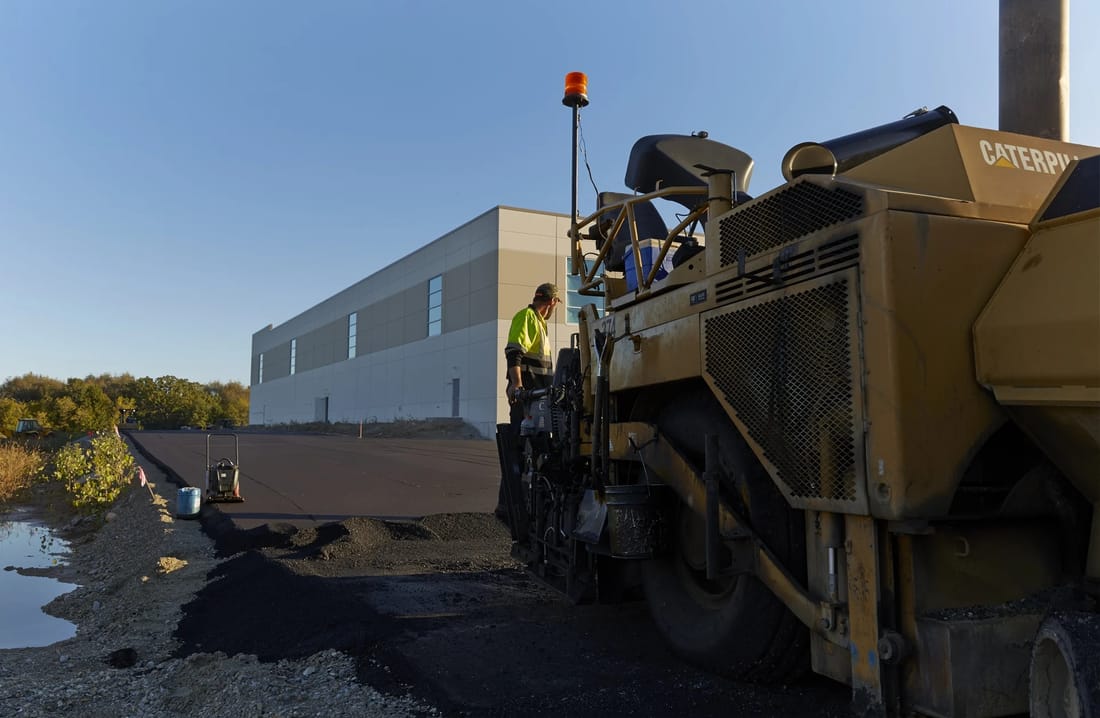
Once the base passes compaction tests, we install the asphalt. For standard car parking in the St. Louis region, a typical section is 2 to 2.5 inches of hot mix asphalt over a solid aggregate base. For commercial truck traffic or frequent deliveries, we often recommend a 3 inch or multi-lift asphalt design, such as a 2 inch base course topped with a 1.5 inch surface course. We use mixes that meet Missouri Department of Transportation standards, adjusted for your site conditions.
The last step is finishing. We roll the asphalt to achieve a tight, smooth surface, then allow cooling time. Once cured, we stripe parking stalls, ADA spaces, crosswalks, and loading zones according to local code. If needed, we also install wheel stops, signage posts, and bollards so your new pavement is both functional and compliant.
Local Codes, Permits, And What St. Louis Owners Should Plan For
Commercial gravel to asphalt projects in St. Louis are affected by local permitting and stormwater rules. Before we put equipment on your property, Precision Asphalt St. Louis helps you understand what your city or county may require. Some municipalities, like St. Louis City and parts of St. Louis County, ask for a paving permit or site plan if you change drainage patterns or increase impervious surface. In many cases, converting an existing gravel lot that has been used for parking does not trigger a major review, but when it does, we coordinate with your engineer or architect.
Stormwater management is a key issue. Asphalt sheds water differently than loose gravel. If your business is near the River Des Peres, in a flood-prone industrial area, or in older neighborhoods with combined sewers, we take a careful look at drainage design so your project does not create runoff issues. Sometimes this means adding a small retention swale, tying into existing catch basins, or slightly adjusting slopes away from neighboring properties.
Parking layout and ADA compliance are another local consideration. For most commercial sites, your striped layout must include the correct number of accessible spaces, with proper widths, aisles, and signage per the 2010 ADA Standards and any local amendments. We routinely stripe accessible stalls with van-accessible aisles, crosshatched areas, and accessible routes to entrances so you are ready for inspection and do not face avoidable corrections after the fact.
If you are working under an HOA or a retail center owner, they may have their own design guidelines. These can include required stall sizes, specified traffic flow patterns, color of striping, or where signage must go. We review those documents up front so the conversion meets both municipal and property management expectations in one pass.
Scheduling also matters in St. Louis, especially around Cardinals games, event traffic, and the freeze-thaw cycle. We aim to schedule paving during stable weather, typically spring through fall, when temperatures allow proper compaction and curing. For businesses that must stay open, like medical offices or grocery stores, we can phase the work so part of your lot remains usable at all times, using cones and clear signage to guide customers.
What Drives Cost And How To Avoid Expensive Surprises
Commercial gravel to asphalt pricing is driven less by the visible area and more by what is happening underneath. The biggest cost factors are base condition, drainage improvements, asphalt thickness, and access for equipment. At Precision Asphalt St. Louis we give itemized estimates so you can see which components affect the budget and why.
If your existing gravel lot has deep, well compacted rock and good grading, we can often reuse much of that, which brings down costs. Problems arise when we discover soft subgrade, buried debris, or saturated areas. In parts of St. Louis built on fill or near old industrial sites, we sometimes uncover cinder, broken concrete, or organic material under the gravel. These sections may need to be excavated and rebuilt with proper stone, otherwise they will become future pothole zones in your asphalt.
Drainage modifications also influence cost. Adding a few shallow swales or regrading for proper slope is relatively modest. Installing new catch basins, tying into storm sewer lines, or importing significant fill because the lot is too low compared to the street can add more. We discuss multiple options with you, including “good, better, best” drainage strategies, so you can balance up-front budget with long-term performance.
Asphalt thickness and mix type are another lever. Light duty parking for employee cars can use a thinner section than a warehouse lot with daily semi traffic or a restaurant with frequent delivery trucks and dumpsters. We will often design thicker pavement just in drive lanes or around dumpsters, and standard thickness in the parking bays, which saves money while still protecting the high stress areas.
To avoid surprises, we recommend two things for St. Louis owners. First, allow for a contingency in your paving budget, especially if your lot is older or you do not know what was done before. Second, choose a contractor who will perform test digs and show you any base issues before you sign a final scope. Our approach is to walk the site with you, point out risk spots, and write them into the proposal clearly so you know what is included and what might be handled as a change only if discovered.
Why Businesses Choose Precision Asphalt St. Louis For Conversions
Commercial gravel to asphalt conversions require more than just paving equipment. You are changing how water moves on your property, how customers and trucks circulate, and how maintenance will work for the next two decades. Precision Asphalt St. Louis focuses on understanding how your business uses the site so we can build pavement structure around that reality, not just around a generic drawing.
Before we propose a solution, we ask questions about your heaviest vehicles, delivery frequency, peak parking times, snow removal methods, and any expansion you are planning. For instance, a distribution center in Earth City that sees constant 18 wheeler traffic needs a tougher pavement and wider turning radii than a professional office in Webster Groves where cars are the main users. We tailor asphalt thickness, base depth, and striping layout accordingly.
We also keep St. Louis winters and summers in mind. Freeze-thaw cycles, road salt, and high temperature swings can accelerate wear. That is why we pay close attention to compaction standards, joint construction, and edge support so water does not infiltrate easily. Where appropriate, we talk with you about future sealcoating and crack sealing plans, so you know what annual or biannual maintenance will keep your new asphalt in top condition.
Communication is a core part of how we work. Before the project starts, we provide a clear schedule showing when gravel work, paving, and striping will occur, and how traffic will be routed. For retail or medical sites, we can supply handouts or email content you can share with tenants or customers to explain temporary parking changes. During construction, our foreman stays on site, and you have a single contact who can answer questions or adjust phasing if something changes in your operations.
If you are considering a commercial gravel to asphalt conversion in St. Louis, MO, we are happy to walk your property, discuss options, and put together a plan that fits your budget and long-term goals. The result is a cleaner looking site that is easier to maintain, safer for customers and employees, and better matched to the demands of our local climate and regulations.