Home › Parking Lot Sealcoating & Maintenance
Protect your investment with parking lot sealcoating and maintenance in St Louis, MO from Precision Asphalt St Louis. We sealcoat, fill cracks, and address minor repairs on commercial asphalt so your lot lasts longer, looks cleaner, and stays safer for vehicles and pedestrians.
Precision Asphalt St. Louis provides professional parking lot sealcoating throughout St Louis, MO, Missouri and the surrounding area. Our licensed, insured crew delivers safe, clean, on-time work with a free estimate before anything begins. Call (314) 333-7779 or request your free quote.
Practical Parking Lot Sealcoating for St. Louis Properties
Parking lots in St. Louis take a beating from hot summers, winter freeze-thaw cycles, and snow removal. Precision Asphalt St. Louis focuses on parking lot sealcoating that is planned around our local conditions so your pavement actually lasts longer and stays presentable for customers.
Sealcoating is not just spraying some black material and leaving. It is a protective coating that seals the surface of your asphalt, slows down oxidation from the sun, helps resist water penetration, and improves appearance. Done correctly on a regular schedule, it can easily double the service life of a parking lot compared to unmaintained pavement.
Our approach is straightforward. We evaluate your lot, fix structural issues first, then apply sealer with the right coverage rate for your traffic level. We focus on drainage patterns, heavy traffic lanes, and loading areas around dumpsters or delivery doors, since those are the first places to fail if they are not prepared correctly.
For St. Louis businesses, we also structure work hours and phasing so you can keep operating while we work. We set up clear traffic control, mark off sections, and plan access to entrances, ADA stalls, and delivery routes before any material is opened.
How Our Sealcoating Process Works Step by Step
Precision Asphalt St. Louis follows a detailed process so the sealer bonds properly and wears evenly instead of peeling in sheets or tracking onto sidewalks.
1) Site inspection and planning: We walk the lot with you, identify problem areas, confirm drainage runs away from buildings, and note oil spots, potholes, and cracks. We also discuss how many parking spaces you can afford to lose at one time so we can phase the work.
2) Cleaning and surface prep: We power blow the entire lot, then use steel wire brooms and mechanical sweepers on stubborn debris. Oil spots are treated with an oil-spot primer so the sealer will stick. Loose asphalt, dirt along curb lines, weeds in cracks, and leftover de-icing material from winter are removed before we apply anything.
3) Crack filling: Any significant cracks are routed as needed, cleaned, and filled with hot rubberized crack sealant, not cold patch in a tube. This step controls water infiltration which is the main cause of base failure and potholes in our climate.
4) Pothole and patch repairs: If we find areas where the asphalt has broken up, we recommend full-depth patching or skin patching depending on the severity. We do not cover over failed areas with sealer because that only hides the problem for a few months.
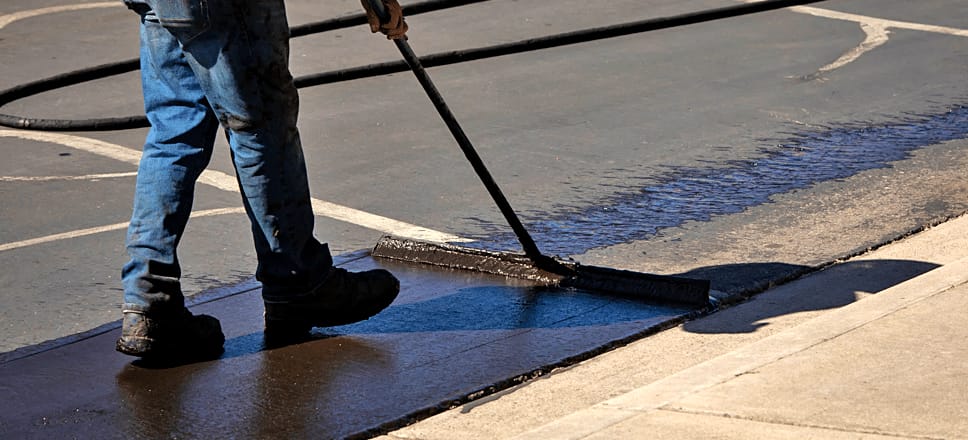
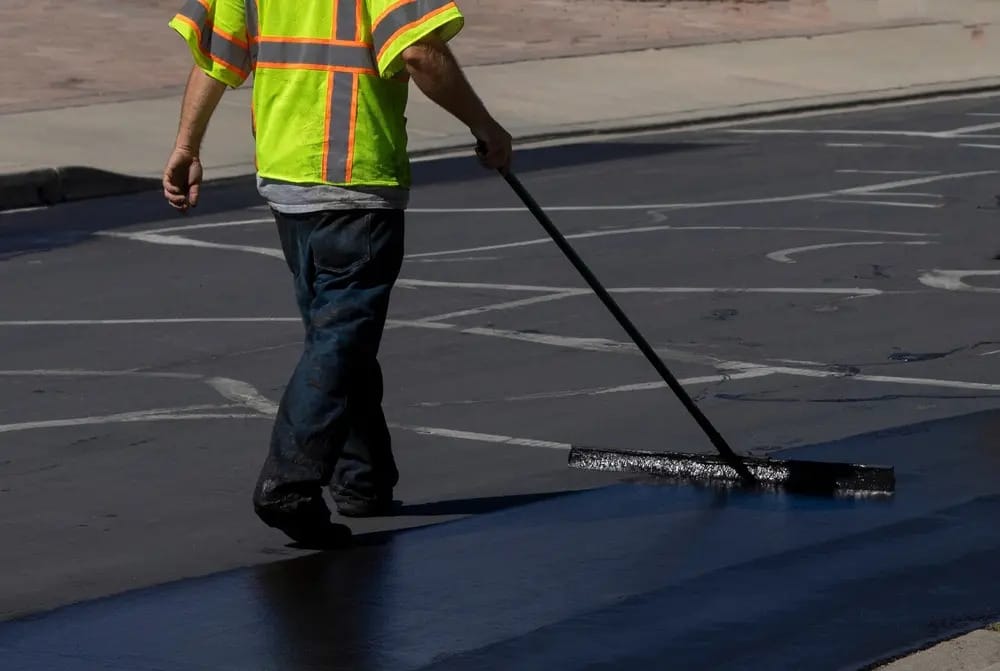
5) Sealcoat application: We typically use a coal tar or asphalt emulsion sealer blend that meets or exceeds current standards, adjusted for your parking lot's traffic level. On most commercial lots we apply two coats in the driving lanes for durability, with attention to edges and high-wear corners. Application is done by a combination of squeegee and spray, depending on the surface texture and layout.
6) Curing and reopening: In St. Louis, cure times vary with humidity and temperature. We usually recommend at least 24 hours before full traffic, and we will tell you exactly when you can reopen each section based on the weather and site shading. We place barricades and caution tape so vehicles do not drive on uncured material.
What Drives the Cost of Parking Lot Sealcoating
When Precision Asphalt St. Louis prices a parking lot sealcoating project, we look at more factors than just square footage. Understanding the main cost drivers can help you budget realistically and compare bids fairly.
Condition of existing pavement: A well-maintained lot with minor cracking and no structural failures will cost less to seal than a lot that needs extensive crack filling, pothole repair, or base replacement. Preparation is usually the largest variable on a job.
Access and phasing: If your property must remain open 24/7, we may need to complete the work in several smaller phases, return multiple days, or schedule off-hours or weekend work. This extra mobilization and traffic control adds to overall cost.
Number of coats and traffic level: Light-use employee parking may only need one robust coat in some areas, while retail centers, medical facilities, or busy restaurants usually benefit from two coats and heavier crack sealing. More material and more time mean higher cost, but that also means fewer repairs later.
Cleaning requirements: Lots with heavy dirt, gravel tracked in from nearby construction, or thick accumulations around curbs and islands need more labor and equipment time to clean properly. Skimping on cleaning to save money almost always leads to early failure of the sealer.
Layout complexity: Lots with many islands, tight corners, loading docks, and multiple entrances require more hand work and detail cutting. Wide open lots are faster to spray and squeegee, which keeps costs down.
We provide written proposals that separate prep, crack filling, sealcoating, and striping as needed, so you can see exactly where your money is going and adjust scope instead of guessing.
Best Timing for Sealcoating in St. Louis Weather
In the St. Louis area, timing your parking lot sealcoating correctly matters as much as the material itself. Precision Asphalt St. Louis schedules work around real local weather patterns so you get full life out of each application.
Ideal temperatures: Sealcoating works best when pavement and air temperatures are consistently above about 50 degrees and rising, with no risk of freezing overnight. For our region, this typically means mid April through late October, depending on the year.
Humidity and rain: St. Louis humidity can slow curing. On very humid days or when there is a chance of afternoon thunderstorms, we adjust start times and sometimes the area we tackle so the material has enough time to set before weather moves in. We will not apply sealer if rain is likely during cure, since that can wash material into drains and leave a patchy surface.
Sunlight and shade: North-facing lots and heavily shaded areas next to buildings or tree lines take longer to dry. We schedule shaded sections earlier in the day and may recommend an extended cure time before reopening those areas, especially in the spring and fall.
Winter and cold weather: We do not recommend sealcoating in winter in St. Louis. Cold temperatures and freeze-thaw cycles prevent proper curing and can trap moisture. However, winter is a good time to inspect and plan, so we often meet with property managers then, identify needed repairs, and get projects on the schedule for early spring when conditions improve.
If you have a specific event, tenant opening, or peak season, we can plan around it. Advance scheduling helps us pick dates with the highest odds of good weather and minimal disruption.
Ongoing Parking Lot Maintenance and Problem Prevention
Sealcoating is only one part of a solid maintenance plan. Precision Asphalt St. Louis focuses on practical steps that keep your lot safe and prevent small issues from turning into expensive reconstruction.
Regular crack sealing: In our freeze-thaw climate, water in cracks expands and contracts until the pavement breaks apart. Having cracks sealed every 1 to 2 years, even in areas that still look good, is one of the most cost-effective ways to protect your investment.
Drainage checks: After heavy rain, walk your lot and look for standing water that lasts more than a few hours. Puddles usually signal low spots, clogged drains, or rutted traffic lanes. We can correct these with localized patching, regrading, or milling, which is far cheaper than waiting until the base fails.
Snow and ice control practices: Metal blades scraping directly on asphalt, especially around high spots and manholes, can strip off sealer and gouge the surface. We advise your plow contractor where to set blades slightly higher and where sensitive areas are, such as recent patches or transitions between old and new pavement.
Oil and chemical spills: Restaurant lots, industrial facilities, and loading zones often develop heavy oil staining. Oil breaks down asphalt binders over time. We recommend spot cleaning and, if needed, localized patching under heavily used dumpsters and delivery bays in addition to regular sealcoating.
Re-striping and signage: A fresh sealcoat usually requires new striping. We can update layout at the same time, adding or revising ADA-compliant stalls, fire lanes, and directional arrows to improve traffic flow and safety. Good markings reduce confusion and fender benders, which is especially important at busy St. Louis retail centers and office parks.
By combining sealcoating with consistent inspection and small repairs, you spread costs over years instead of facing a full replacement all at once.
What to Expect When You Hire Precision Asphalt St. Louis
Working with Precision Asphalt St. Louis on parking lot sealcoating is designed to be predictable and straightforward so you can manage tenants, customers, and staff without surprises.
Initial meeting and proposal: We visit your site, walk the lot, discuss your budget and timing, and talk through priorities, such as which entrances must remain open and any special needs like ambulance or delivery access. We then send a written proposal detailing scope, materials, schedule, and pricing.
Pre-job communication: Before we start, we provide a clear schedule and phasing plan. Many property managers in St. Louis choose to email or post this to tenants ahead of time so everybody knows which areas will be closed and when. We can also provide simple maps that show closure phases.
On-site coordination: On the project day, our crew sets up cones, barricades, and caution tape, and we post temporary signage so drivers understand where to go. We coordinate with your staff if vehicles need to be relocated and keep someone on site who can answer your questions throughout the job.
Quality and cleanup: We protect adjacent concrete, curbs, and landscaping, and we take extra care around drains to prevent sealer from entering the storm system. When the work is complete and cured, we remove all traffic control and leave the lot neat and ready for use.
Follow-up: After the project, we can set up a simple maintenance schedule so you know when to budget for future crack sealing and the next sealcoat. Many of our St. Louis clients run multiple properties, so we also offer staggered plans that spread work over several seasons instead of all at once.
If you are looking for practical, locally informed advice, we are happy to walk your lot, point out the specific issues we see, and give you options instead of one generic solution.