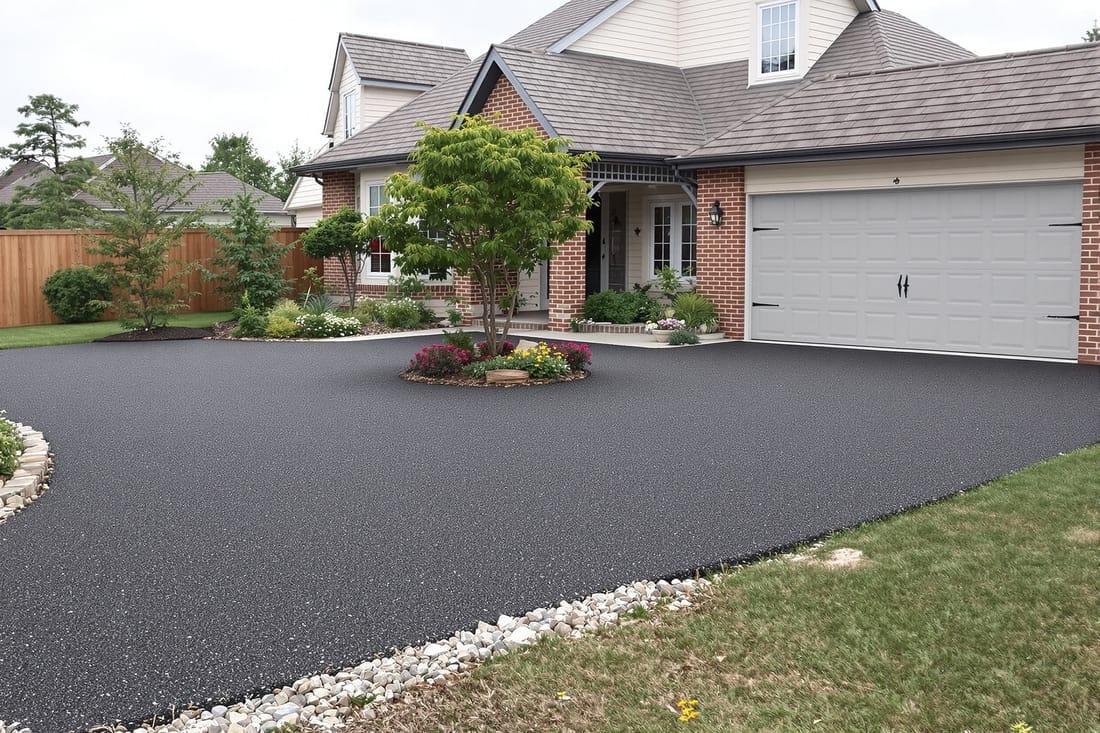
Home › Gravel-to-Asphalt Conversions
Tired of ruts and mud from a gravel drive in St Louis, MO? Precision Asphalt St Louis offers gravel to asphalt driveway conversions that transform dusty, uneven surfaces into clean, solid pavement. We regrade, compact, and pave so you get a smoother, easier to maintain driveway.
Precision Asphalt St. Louis provides professional gravel to asphalt driveway throughout St Louis, MO, Missouri and the surrounding area. Our licensed, insured crew delivers safe, clean, on-time work with a free estimate before anything begins. Call (314) 333-7779 or request your free quote.
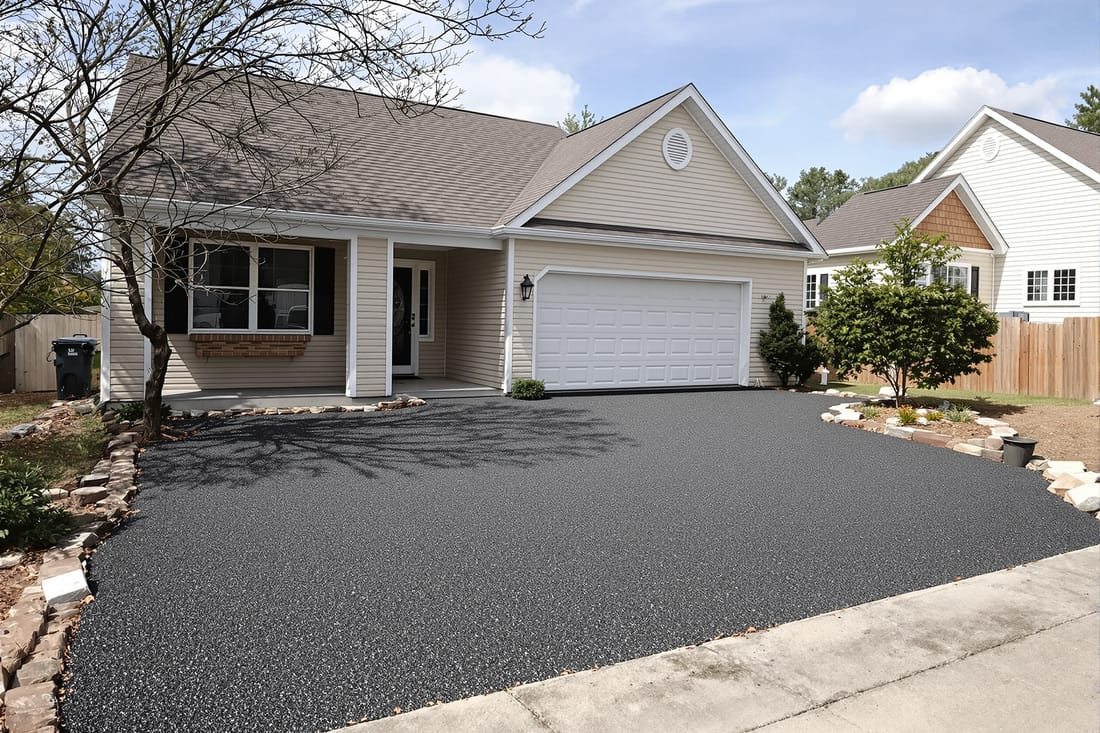
Turn Your Gravel Driveway Into a Solid Asphalt Surface
If you are tired of dust, ruts, and loose rock every time you pull in, a gravel to asphalt driveway conversion can make day to day use much easier. Precision Asphalt St. Louis focuses specifically on converting existing gravel drives in and around St Louis, Missouri into properly built asphalt surfaces that hold up to local weather and traffic.
A good conversion is not just spreading blacktop over rock. The base under your gravel has to be evaluated, reshaped, and compacted so the finished driveway does not crack or sink. We look at how water currently moves across your property, the thickness and type of existing gravel, and the weight of vehicles using the drive. That on site assessment shapes the entire plan, from how deep we excavate to which asphalt mix we choose.
In the St Louis area, many gravel drives sit on clay soils that hold moisture. If that is not addressed before paving, you can end up with soft spots and early failure. Our crews are used to working with these local soil conditions and adjust base depth, drainage, and compaction methods accordingly so your new asphalt driveway behaves like a true permanent surface, not just a dressed up gravel lane.
How We Convert a Gravel Driveway to Asphalt, Step by Step
Precision Asphalt St. Louis follows a defined process for gravel to asphalt driveway projects, so the finished surface is smooth and durable.
1. Site inspection and layout. We walk the full length and width of the existing drive, mark property lines and edges, note drainage issues and utility locations, and confirm access for our equipment. We also discuss parking patterns, turn around space, and whether you want wider sections or pull offs.
2. Grade checks and cut or fill plan. Using grade rods or laser levels, we confirm slopes away from buildings and toward ditches or yard areas that can accept water. If the current gravel traps water or creates low spots, we plan where to cut high areas and where to add base stone.
3. Base correction. In conversion work this is the most important phase. We scarify or peel back loose, dirty gravel, remove any organic material or soft mud pockets, then rebuild the base with compacted aggregate to a target depth usually between 4 and 8 inches depending on traffic load. We compact in multiple passes with heavy rollers and plate compactors along edges.
4. Edge and drainage details. For St Louis driveways, we often add shallow swales, small culverts at street entrances, or tie in to existing ditches so water does not sit on the asphalt. We also set edge restraints where needed such as ribbon curbs, stone borders, or transition tapers to yards or sidewalks.
5. Asphalt paving. Once the base is dense and shaped, we lay a binder or single lift of hot mix asphalt. Residential drives typically get between 2 and 3 inches of compacted asphalt. For heavier use, such as RV parking or work trucks, we may recommend a 2 layer system with a base course and a finer surface course for better wear.
6. Final compaction and tie ins. We roll the new asphalt with steel and rubber tire rollers to lock the surface. Next we hand finish the edges, feather into the roadway or garage floor, and check all transitions so there are no abrupt bumps when you drive in or out.
Design Options for Your New Asphalt Driveway
A gravel to asphalt driveway conversion is a chance to correct old layout issues and improve how you use the space. Precision Asphalt St. Louis helps you make choices that affect appearance, function, and budget.
Width and layout: Many gravel drives in older St Louis neighborhoods are barely wide enough for one vehicle. During conversion you can widen key sections, add parking pads, or create a loop or hammerhead for easy turning. Small changes in layout can prevent rutting at tight corners and reduce grass damage.
Thickness and mix: Not every driveway needs the same asphalt structure. Light use homeowners might choose a standard residential mix at a 2 inch compacted thickness, while small business owners who park trailers or service trucks might move to 3 inches or a base plus surface system. We explain the tradeoffs in cost and lifespan so you are not paying for structure you do not need, or underbuilding a driveway that will see heavy loads.
Edges and appearance: You can choose simple tapered edges that blend into the yard or defined edges with concrete or stone borders that help hold the asphalt and keep landscaping out. Pavement markings, such as simple parking stripes or guest parking indicators, can be added on wider pads. Although standard asphalt is black, sealcoating later on can adjust the shade and give a more uniform, finished look.
Add ons: During a conversion it is often practical to add small features like a gravel shoulder along one side to help with drainage and provide space to step out of vehicles, or to integrate a future walkway connection to the house. We can also prep a thicker pad area for future sheds or basketball goals so you are not reworking the surface later.
What Affects the Cost of a Gravel to Asphalt Driveway
Customers in St Louis often ask why driveway bids can vary so much. Precision Asphalt St. Louis is clear about the factors that really move the price on a gravel to asphalt driveway conversion.
Base repair and depth: If your existing gravel is thin, full of mud, or sitting on soft clay, we have to add more aggregate and additional compaction passes. Base work is by far the largest driver of cost but it is also what determines whether the driveway lasts ten years or starts to fail after two or three freeze thaw cycles.
Driveway size and layout complexity: Long, straight rural drives are generally more cost efficient per square foot than short, curved drives with tight access. Extra handwork around retaining walls, trees, or existing structures adds time. Steep slopes or very hilly sections require more grading and may need thicker pavement or special drainage features.
Access and trucking: In the St Louis region, trucking routes, distance from the asphalt plant, and how easily our equipment can reach the site all affect production. A driveway deep in a wooded property or off a narrow alley might need smaller machines and more labor hours.
Drainage corrections: If we have to add culverts, build ditches, or install additional stone drainage layers, those items show up in the estimate. Skipping drainage to save a small amount upfront often leads to edge failures, potholes, and heaving as water gets trapped under the pavement.
Extras and future use: Planning for heavier vehicles, extra parking pads, or structural pads for RVs and equipment will increase thickness and reinforcement needs. We walk through these choices so you understand what is optional and what is necessary for your situation.
Common Problems With Conversions and How We Avoid Them
Converting gravel to asphalt is not difficult for an experienced crew, but certain mistakes will shorten the life of your new driveway. At Precision Asphalt St. Louis we structure our work specifically to avoid the issues we see most often around Missouri.
Soft spots and sinking: If a contractor simply levels the gravel and paves over it, any hidden weak areas will show up as depressions within a year or two. We use proof rolling and probing to locate soft pockets, then undercut those areas, replace with suitable aggregate, and recompact before paving.
Poor drainage and standing water: St Louis gets hot summers, heavy downpours, and winter freeze thaw cycles. Water that stands on or under the driveway is the main cause of cracking and edge breakup. Our crews set grades to at least a gentle slope for water to move, and we tie into existing ditches, drains, or culverts as part of the conversion so water has a place to go.
Thin or segregated asphalt: A driveway surface that looks fine on day one can still fail early if thickness is inconsistent or if the mix cools too fast. We monitor temperatures during paving and compaction, check application rates, and ensure proper rolling right away so the surface is dense and uniform.
Bad tie ins to garages or streets: A rough bump at the garage threshold or street approach is more than just an annoyance. It concentrates pressure on small areas of the asphalt and leads to edge breakdown. We spend time cutting and matching these transitions so vehicle loads are transferred smoothly from one surface to the other.
Lack of maintenance plan: Every new asphalt driveway needs basic care. Before we leave, we advise on when to allow traffic, when to schedule the first sealcoat, how to handle snow removal without gouging the surface, and what small issues to watch for so you can address them early.
Working With Precision Asphalt St. Louis on Your Project
Local experience matters when you convert a gravel driveway to asphalt in the St Louis area. Soil types change quickly between properties, older neighborhoods may have shallow utilities or undocumented drainage lines, and many counties and municipalities have specific rules for driveway entrances at public roads.
Precision Asphalt St. Louis is familiar with local requirements and typical site conditions across the metro region. We look at where your property sits, what kind of subgrade you have, and how city or county water flows along your street before we ever bring a paver on site. That planning reduces surprises and helps your project move quickly once we start.
Communication is straightforward. We walk you through the scope in plain language, show you where we plan to cut, fill, and add drainage, and explain the reasoning. During the job we keep access open as much as practical so you can still get vehicles in and out, and we give clear guidance on cure times before regular use.
If you are considering a gravel to asphalt driveway, the first step is an on site look at your existing drive. We can usually give a ballpark range after a short visit, then provide a written proposal that breaks out base work, paving, and any drainage or layout changes. There is no assumption that the cheapest option is best. Our goal is to match the structure of the driveway to how you actually use it so you are not dealing with ruts and potholes again in a few years.