Home › Industrial and Heavy-Duty Asphalt Paving
Handle heavy traffic with industrial asphalt paving in Saint Louis, MO. We design and build thick, reinforced asphalt sections for truck yards, loading docks, and warehouse lots. Proper base design and compaction help resist rutting and failure under constant loads.
Precision Asphalt St. Louis provides professional industrial asphalt paving throughout Saint Louis, MO, Missouri and the surrounding area. Our licensed, insured crew delivers safe, clean, on-time work with a free estimate before anything begins. Call (314) 333-7779 or request your free quote.
Industrial Asphalt Paving for Real-World St. Louis Loads
Industrial and heavy-duty asphalt paving is a different animal from a basic parking lot or driveway. At Precision Asphalt St. Louis, we design pavements that can handle loaded semis, forklifts, dumpsters, and constant turning traffic without raveling or rutting. That means thicker sections, stronger mixes, and careful planning for how your site is actually used.
In the St. Louis area, we install a lot of industrial asphalt for distribution centers along I-70 and I-270, manufacturing plants in Earth City and North County, and older warehouse districts closer to downtown. Many of these properties were built in the 1960s through the 1990s, so the existing pavement or base is often tired, patched many times, or sitting on clay soils that move with our freeze-thaw cycles. We take those local conditions into account, then build a pavement structure that fits your loads instead of a one-size-fits-all design.
If your property sees regular truck traffic, double trailers, container yards, or heavy equipment, you need a pavement plan that considers truck routes, turning areas, and loading zones independently. Precision Asphalt St. Louis separates those areas in the design phase so the pavement under dock doors and dumpster pads is built heavier than the employee parking around the perimeter. This targeted approach controls cost while still protecting the spots that take the worst abuse.
We also understand this is a business decision, not just a construction project. Downtime hurts. Our crews schedule work to minimize disruption to shipping and receiving, coordinate with your operations team, and phase construction so you can keep as many doors open as possible during the project.
How We Design Heavy-Duty Asphalt Pavements
A strong industrial asphalt pavement starts with the right design. We begin with a site visit, walking the property with you to see where trucks enter and exit, where they queue, where trailers are parked long term, and which areas are mostly passenger vehicles. We look for rutting, alligator cracking, pumping at joints, and standing water, since those are clues about what has failed under the surface.
For industrial asphalt paving, we typically recommend thicker sections than a standard commercial lot. For example, a truck court in St. Louis with frequent 18-wheeler traffic often needs 3 to 4 inches of surface and binder over 8 inches or more of compacted rock base. In areas with constant trailer parking or trash truck turning, we may increase the asphalt thickness or improve the base layer to reduce flexing. For truly severe loading (like container yards or equipment storage) we may suggest a full-depth asphalt design with no separate stone base at all.
Material selection is critical. Precision Asphalt St. Louis uses heavy-duty asphalt mixes with a higher stone content and performance-graded binders that resist rutting in our hot, humid summers. In some high-stress spots, we might recommend a polymer-modified surface mix or a slightly coarser aggregate blend to improve shear strength. These details matter when you are fighting against slow grinding and shoving from heavy truck tires.
Subgrade and drainage are just as important as asphalt thickness. Much of St. Louis County has clay soils that hold water, which leads to pumping and base failure. We may undercut soft areas, install geotextile fabric for separation, or add additional rock and compaction to stiffen weak zones. Surface drainage is addressed with proper slopes so water moves to inlets or ditches instead of sitting in ruts or along dock doors.
Step-by-Step Industrial Asphalt Paving Process
Heavy-duty paving succeeds or fails based on the details of the construction process. After design and planning, we start by milling or excavating the existing pavement. For older industrial sites around St. Louis, this may involve removing several generations of patching and thin overlays that have trapped water underneath. We cut clean edges at tie-in points so the new pavement locks in solidly with surrounding areas.
Once the old material is removed, we proof-roll the base with loaded trucks or compactors to identify soft spots. Any areas that deflect under load are undercut and rebuilt with new aggregate. We then grade and compact the stone base in layers, checking elevations to hit the designed slopes toward drains and not let water collect in low spots.
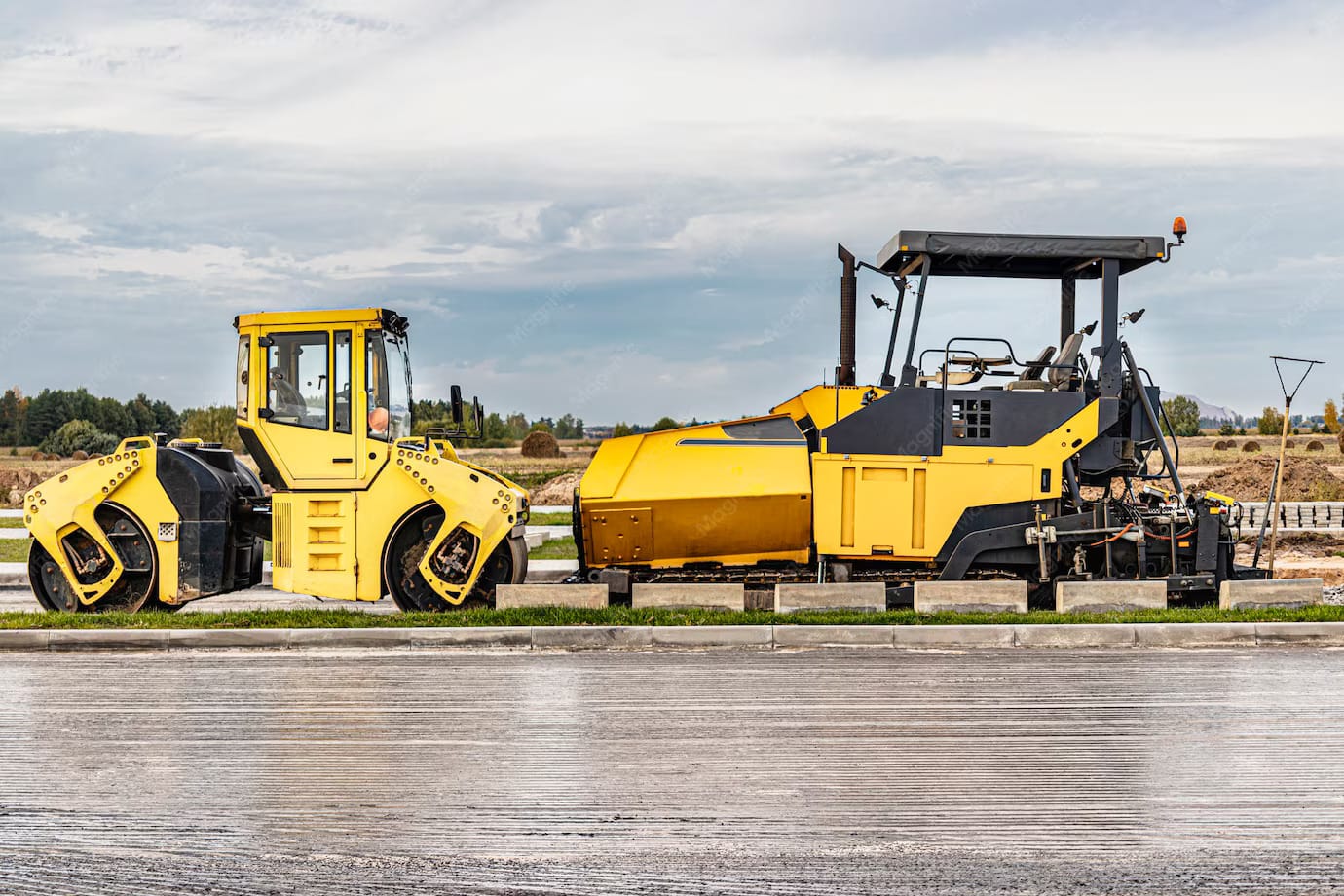
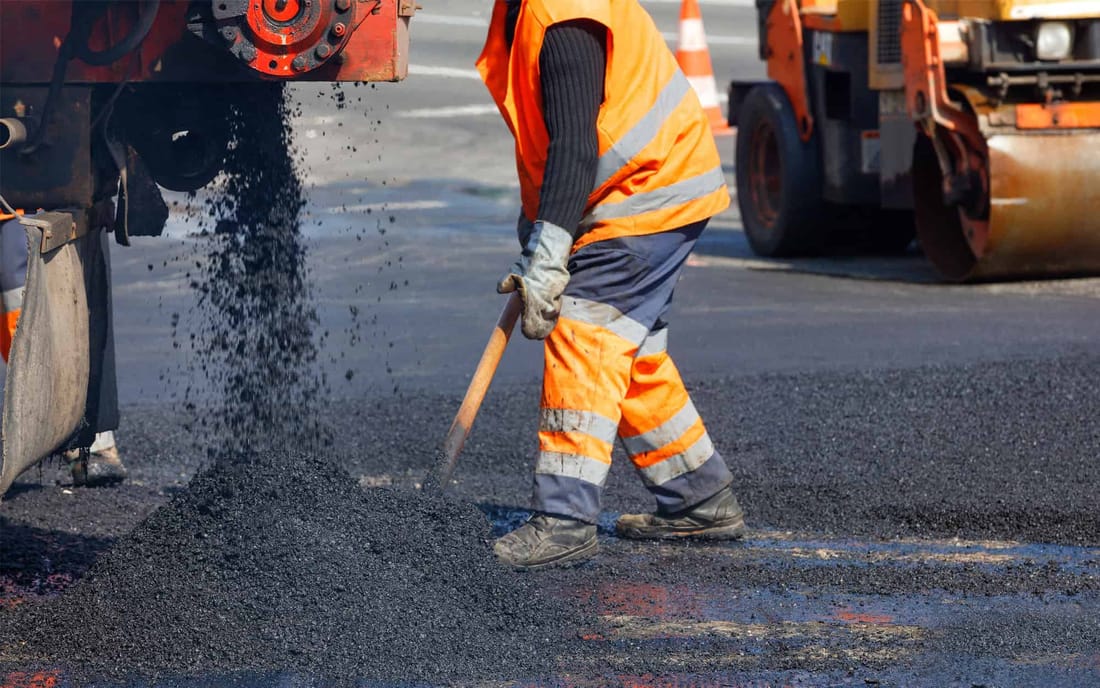
Next we pave in lifts. For an industrial asphalt paving project, we usually install a strong base or binder course first, often 2 to 3 inches thick, followed by an additional intermediate course if needed, then a dense-graded surface course. Each lift is placed with a paver, then compacted immediately with steel drum and pneumatic rollers while the mix is still within the right temperature range. Proper compaction is what gives industrial pavements the density they need to resist fuel, oil, and water penetration.
For loading docks, dumpster pads, and tight turning areas, we pay extra attention to joint placement and compaction at the edges. Poorly compacted joints are often the first failure points, so our crews stagger joints and roll them correctly to avoid early cracking. Finally, we stripe, mark truck routes, and add signage once the asphalt has cooled so your drivers know exactly how to use the new layout on day one.
What Drives the Cost of Industrial Asphalt Paving in St. Louis
Industrial asphalt paving is a larger investment than typical commercial work, and it helps to understand where your money actually goes. The biggest drivers of cost are pavement thickness, base preparation, and access logistics at your facility.
Thicker asphalt and stronger bases naturally require more material and time. A 4 inch pavement over a well-compacted, existing base costs significantly less than a 6 or 7 inch full-depth asphalt section with undercuts and new rock. In areas of St. Louis with chronic subgrade issues or poor drainage, such as older riverfront industrial areas, we often need more base work to stabilize the site. That upfront cost is what prevents constant patching and shutdowns later.
Access and phasing also affect price. If we can work in wide open phases with easy truck access and room to stage material, the project is more efficient. If your plant runs 24/7, has limited staging, or can only shut down a dock or two at a time, we build more labor and coordination into the plan. Night work or weekend work is possible around St. Louis, but it changes how we schedule crews and asphalt deliveries from local plants.
Specialty details can also influence cost. Surface mix upgrades for high heat and heavy traffic, reinforced transitions where asphalt meets concrete docks, trench drain reconstruction, and replacement of failing catch basins are common add-ons for industrial facilities. Precision Asphalt St. Louis walks you through these options, explains what is truly necessary versus what is nice to have, and helps you prioritize within a realistic budget.
To keep bids apples-to-apples, always ask prospective contractors to list pavement thicknesses, base type and depth, and how they will handle weak subgrade areas. If a quote seems much cheaper but is vague on these points, it often means corners are being cut where you cannot see them.
Planning, Maintenance, and How to Choose a Paving Partner
For industrial properties in St. Louis, the planning and long-term maintenance strategy are just as important as the initial construction. Before work starts, we coordinate with your facility managers to map delivery schedules, identify critical dock doors, and decide on phases that keep your operation moving. We often build temporary access paths or designate alternate truck routes during certain phases so drivers have clear, safe paths at all times.
After construction, we recommend a simple maintenance plan tailored to heavy-duty use. This usually includes regular inspection of high-stress areas, prompt crack sealing to keep water out of the base, and periodic sealcoating on lighter-duty sections if appropriate. In very heavy truck courts, we may focus more on crack and joint maintenance and less on cosmetic sealers, since performance matters more than appearance in those zones.
When you are choosing a contractor for industrial asphalt paving, ask specifically about experience with heavy truck yards and manufacturing sites, not just office parks. Ask to see local examples of work at facilities similar to yours and find out how long those pavements have been in service. Precision Asphalt St. Louis can point to projects around the metro area that have handled years of truck traffic with only routine maintenance.
Local knowledge is a real advantage in our climate. A contractor who understands how St. Louis clay soils behave, how our summers soften pavement, and how winter freeze-thaw cycles attack weak spots will design a stronger system. We bring that local, practical experience, a clear explanation of the technical choices involved, and a straightforward approach to scheduling and communication so you know what will happen, when, and why.